Spring Bulb Planting Checklist for a Continuous Six-Month Bloom
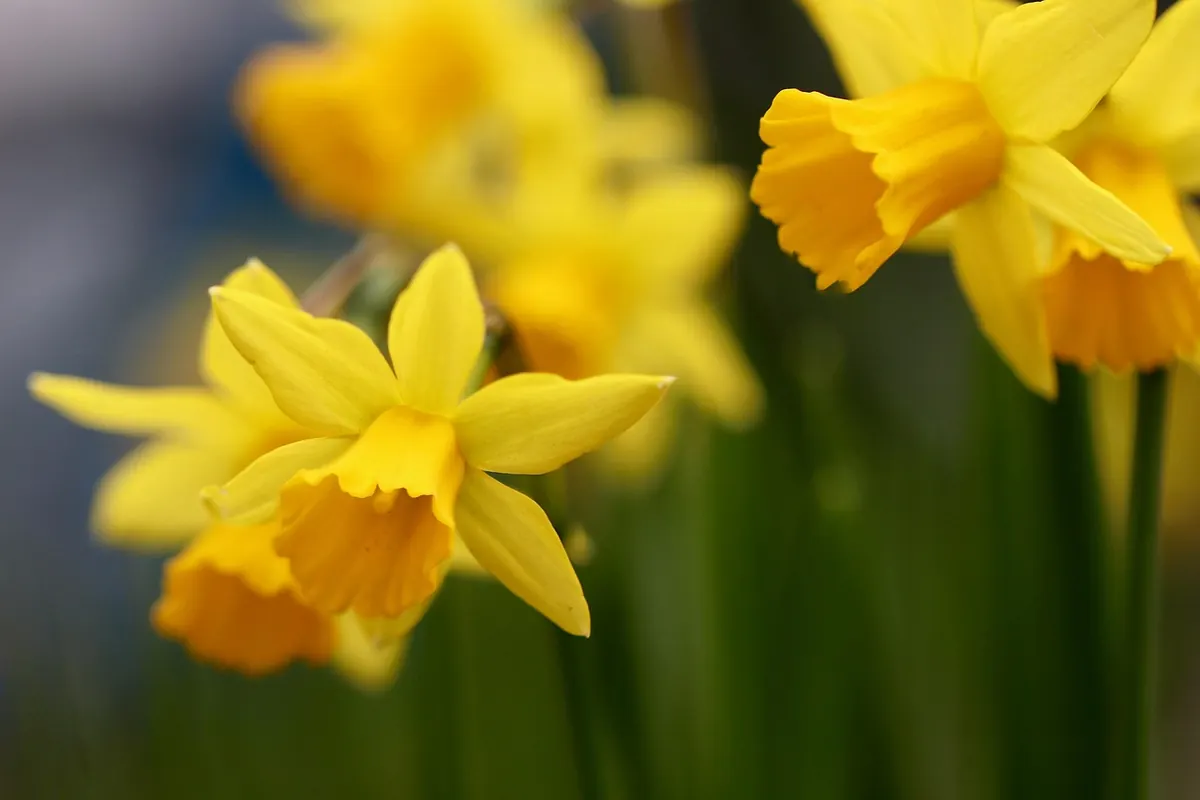
A spring garden that flowers for six months is not luck. It is a planting plan made in autumn, when the bulbs are on the shelf and the border still looks like nothing much. Most of us buy one bag of tulips, plant them in a single satisfying afternoon, and then spend May wondering why everything went quiet so quickly. The fix is small and cheap: stop choosing bulbs by how they look on the packet and start choosing them by when they flower. Do that and one bed can carry you from the first snowdrop in January to the last allium in early July.
Open a notebook, or a spreadsheet if that is how your brain works, and divide the year from late January to early July into fortnightly blocks. Then walk the garden and write down what already flowers in each block. You will usually find two or three rich weeks in April and May, and long empty stretches either side.
Those gaps are your shopping list. This matters because a garden in Palermo and a garden in the Dolomites differ by roughly a month; the same daffodil that opens in the first week of March in Sicily may not show colour until early April in the foothills. So plant for your weeks, not for the ones printed in a catalogue written somewhere else. If you want to be precise, note the flowering time your supplier gives and add or subtract two to three weeks for your own climate and aspect.
Bulbs sort neatly into early, mid and late. You do not need dozens of varieties. Three or four good ones in each band, repeated in generous drifts, will do more than a scattered collection of twenty.
This is the layer most gardens are missing, and the one that earns the most gratitude. Snowdrops (Galanthus) come first, often while the ground is still half frozen. Winter aconite (Eranthis hyemalis) follows with those butter-yellow cups, then Iris reticulata in blue and purple, early species crocus, and the earliest daffodils such as pale yellow Narcissus 'Rijnveld's Early Sensation', which will open in a mild January. Add Anemone blanda for a low carpet of blue into March.
Plant these where you walk past in bad weather: beside the path, by the front door, near the bin store. You will not go looking for them in the rain, so put them in your way.
This is the easy band, the one everybody plants. Hyacinths and mid-season daffodils lead, followed by grape hyacinths, Scilla siberica, snake's head fritillary and the Triumph and Darwin tulips that hold the garden together through late April. Group them by colour rather than by variety — five of one thing always reads better than one of five things.
Here is where most planting plans stop too soon. Late tulips — Single Late, lily-flowered and parrot types — carry colour into the second half of May. Then the baton passes to Camassia, Dutch iris, Fritillaria imperialis and Allium 'Purple Sensation', whose violet globes last for weeks and dry beautifully on the plant. Finish the sequence with Allium sphaerocephalon in July and a few lilies, and you have a genuine six-month run.
The technique is sometimes called lasagna planting, and it works because bulbs of different sizes root at different depths and wake up at different times. Nothing competes; the shallow ones simply finish before the deep ones get going.
In pots you can plant more densely than in open ground — bulbs can sit closer, and a packed pot looks far better in March than a polite one.
The old rule holds: plant at two to three times the bulb's own height. Small crocus go in at 8 cm, big daffodils at 15 cm, large alliums a little deeper still. Planting too shallow is the most common mistake, and it leads to bulbs that heave out of the soil in a frost or flop when they flower.
Improve the planting hole rather than the whole bed. A handful of grit in heavy clay, a little garden compost, and nothing rich underneath the bulb itself — a bulb sits on its own food store and does not want to be pushed into soft, damp fertility. Tulips in particular need a cold winter to flower well; in very mild gardens, pre-chill them in the fridge for six to eight weeks before planting, keeping them away from ripening fruit.
Plant for the weeks you actually look at the garden, not the weeks the catalogue promises. A border you pass every morning will forgive a lot; a border you visit once a fortnight will not.
The discipline that separates a six-week spring from a six-month one is patience with foliage. Leave the leaves on until they yellow and collapse, roughly six weeks after flowering. That green tissue is feeding next year's flower. If the flopping offends you, bundle the leaves with a soft tie, or plant the bulbs behind perennials that emerge late — hardy geraniums, eupatorium, grasses — so the dying foliage is hidden rather than cut.
Deadhead as flowers fade unless you want seedheads. Allium globes are worth leaving; tulip petals are not, because a heavy tulip head that sets seed wastes the bulb's reserves. Feed once after flowering with a potassium-rich fertiliser, and never tidy the bed with a fork in spring — you will spear more bulbs than you can count.
Wildlife is a real cost of autumn planting. Lay chicken wire just below the surface over new plantings, plant deep, and firm the soil so the scent trail is weaker. In wet gardens, raise the planting pockets with grit and avoid the lowest corner of the lawn. Crocus and tulips are the favourites; daffodils and alliums are usually left alone, which is one more reason to give the early and late layers plenty of room.
Do this once, properly, and the following autumn you will only need to top up the gaps. That is the quiet pleasure of a layered bulb bed: it looks after itself for years, returning the same reliable sequence of flowers while the rest of the garden is still deciding what to do.
Photo: Nennieinszweidrei / Pixabay
Previous Post
How to Design a Small Urban Garden That Feels Twice Its Size
Next Post
Drip Irrigation vs. Soaker Hoses: Which Is Better for a Raised-Bed Vegetable Garden?