How to Design a Small Urban Garden That Feels Twice Its Size

A city garden of four by five metres can feel generous or cramped, and the difference rarely comes down to the square metres. It comes down to what you can see, where you can walk, and whether the eye is allowed to travel further than the fence. Most small plots fail for the same reason: everything sits at the same height, in the same material, at roughly the same distance from the house. Change those three things and the space starts to behave like something bigger.
Stand at the back door. Then stand at the kitchen window, the one you actually look out of while the kettle boils. What do you see first, and where does your eye stop? In most small gardens it stops about two metres in, on a bare fence panel or the wheelie bin.
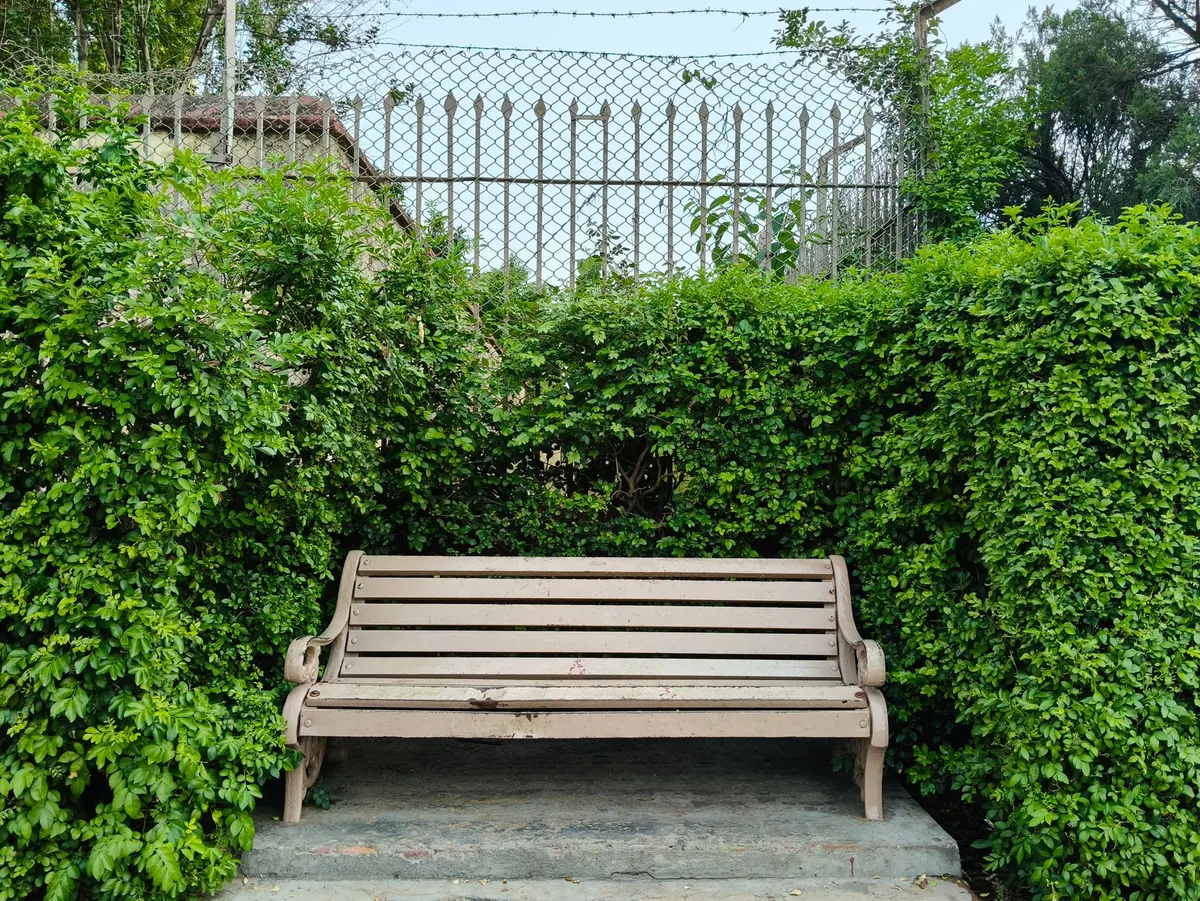
The fix is usually a diagonal. A path that runs corner to corner across the plot gives a longer view than one that runs straight down the middle, and it makes the far end feel further away than it is. If you are relaying paving, pull the main line off-centre and let it curve gently towards a corner. Put your strongest feature — a single large pot, a small tree, a bench — at the end of that line, slightly off-centre rather than dead centre, so the eye has somewhere to arrive.
Two measurements worth keeping in mind. Paths narrower than about 60cm feel like corridors, so save width where you can. Lawns smaller than roughly three metres across read as a green doormat and cost you planting space; gravel, decking or a planted bed usually earns its place better in a courtyard.
A tiny garden still needs to do several jobs: somewhere to sit, somewhere to grow things, somewhere to store the things you do not want to look at. Give each job its own patch instead of letting them overlap into mush.
In a courtyard of four by six metres you can comfortably fit a sitting area of about two by two metres, a planting and growing strip along one boundary, and a narrow transition zone by the door for boots, a watering can and a bag of compost. Mark the change between zones with a different surface — decking to gravel, paving to planting — rather than with walls or screens. One change of material is enough; three starts to look busy.
Scale matters as much as layout. A two-metre picnic table will swallow a small terrace. A bistro table of 60–70cm, a built-in bench along a wall, or a folding table that hooks off the fence will seat four people without eating the floor.
You do not need to screen the bin store completely. A single tall grass in a pot, or a low bed of shrubs at hip height, is enough to break the view. Partial screening is better than a solid wall, because the suggestion of something beyond it adds depth. Full concealment in a small garden just builds a corridor.
Floor space is the scarcest thing you have, and walls are the resource most people ignore. A fence two metres high and five metres long is ten square metres of growing space going spare.
Build the planting in layers, working upwards:
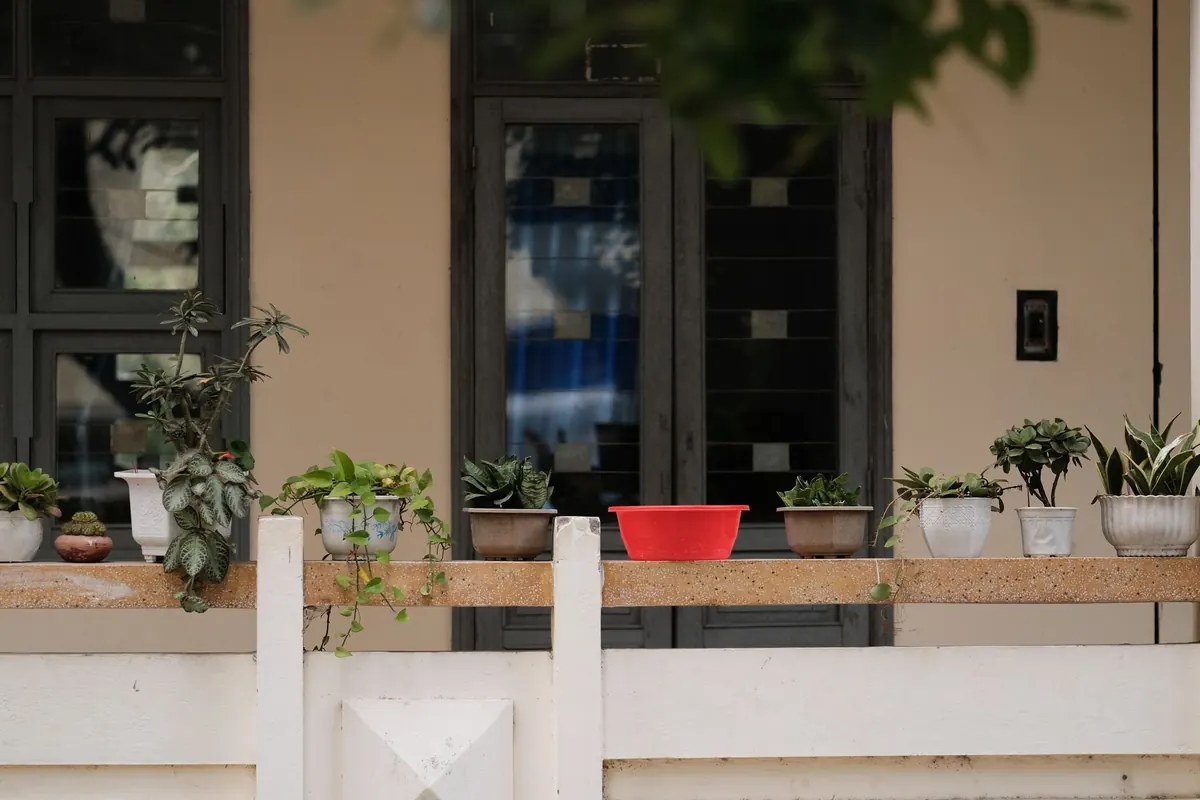
Resist covering every wall. Leave one plain surface — it reflects light, rests the eye, and makes the planted walls look deliberate rather than desperate. And buy fewer, larger pots: a 45–50cm container holds moisture and temperature far better than five small ones, and one generous pot reads as a feature where five small pots read as clutter. Group them in odd numbers, in the same material, so they look like a decision.
Small gardens are usually darker than their owners think, because boundaries eat the light. A dark-stained fence absorbs it; a warm off-white, pale grey or soft sage paint bounces it back and visually pushes the boundary away. The same applies to surfaces underfoot: pale gravel or light decking lifts a shaded corner in a way that dark slate never will.
Be honest about the shade you plant. A tall evergreen on the sunny side will cost you hours of light across the whole plot, so put the tall things where their shadow falls on the least useful corner — often the one nearest the house, which you look at rather than sit in.
A mirror can work, used sparingly. One panel, framed like a window and angled to reflect planting rather than a drainpipe, adds depth. A wall of mirrors turns the garden into a fairground and advertises every leaf you have not swept up. After dark, keep lighting low and warm: a couple of small uplights into a tree or a pot, or a string of lights under a bench, does more for the sense of space than floodlights. Bright light flattens a garden; low light stretches it.
Restraint is what separates a designed small garden from a crowded one. Two paving or surface materials, maximum. Three to five plant colours, repeated. One tree, one bench, one water bowl.
The collector's instinct — a bit of everything, bought a plant at a time — is fatal in a plot this size, because variety at close range reads as noise. Repetition reads as calm, and calm reads as space. If you love a plant, buy three of it and plant them as a group.
You do not have to dig anything up to test the ideas above. Start here:
Small gardens reward editing more than adding. Before you buy anything else, take something out, move one thing to the far corner, and give the eye a longer line to follow. That single change usually does more than a whole season of planting.
Photo: Veronika_Andrews / Pixabay